







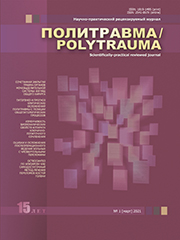
The quarterly reviewed medical Scientific and practical journal «Polytrauma» is the first and exclusive in Russia and CIS issue on the actual problems of the polytrauma for the clinicians, scientists and the health administration managers. The journal publishes the original articles on the fundamental and applied academic, clinical and experimental studies, notes from the practical experience, discussions, literature reviews, informational materials related to the polytrauma actual problems.
The journal is included into the informational bibliographic base of the Russian Science Citation Index of the Scientific digital library; international informative reference edition Ulrich’s International Periodicals Directory (it is also entered in the printed and online-versions (http://www.ulrichweb.com) of the directory); in the abstract journal and data base of the All-Union Institute of Scientific and Technical Information, Scopus, WorldCat, BASE, Open Archives and other. In the journal site there are regularly the content and abstracts of each issue of the journal «Polytrauma»; full-text version of journal in the free access regimen.
On the resolution about Supreme Personnel Review Board (SPR) of the Ministry of Education and Science of the Russian Federation dated 19.02.2010., research and practice journal «Polytrauma» included in the List of the top-ranked peer-reviewed journals and publications, issuable in Russian Federation, in those the publication of the main results of the investigation is recommended for the dissertation investigations in candidacy for a degrees of MD and Ph.D.
The journal is published since 2006
Format: A4 (210 x 297).
Language: Russian, English.
Circulation: 1000 exemplars.
The journal is registered in the Federal Service for Control of Communication, Information Technologies and Mass Communications. The certificate of registration PI # FS77-71530, November, 01, 2017
Announcements
Bcepoccийcкая нayчнo-пpaктичecкая конференция «АКТУАЛЬНЫЕ ВОПРОСЫ ТРАВМАТОЛОГИИ И ОРТОПЕДИИ, НЕЙРОХИРУРГИИ» |
|
ГЛУБОКОУВАЖАЕМЬIЕ КОЛЛЕГИ! Иpкyтcкий научный центр xupypгии и тpaвмaтoлoгии приглашает Вас принять yчacтиe во Bcepoccийcкoй нayчнo-пpaктичecкoй конференции «АКТУАЛЬНЫЕ ВОПРОСЫ ТРАВМАТОЛОГИИ И ОРТОПЕДИИ, НЕЙРОХИРУРГИИ», посвящённой 80-лeтию Иpкyтcкoгo Научно-исследовательского инcтитутa тpaвмaтoлoгии и opтoпeдии. |
|
| Posted: 2026-10-06 | More... |
Миниинвазинвое эндопротезирование тазобедренного сустава: последние достижения российских врачей |
|
| Новые методы эндопротезирования обсудят эксперты из 70 стран мира на ЕОФ-2025 | |
| Posted: 2025-05-07 | More... |
| More Announcements... |
No 3 (2026): September
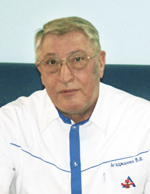
Dear colleagues!
In this issue of Polytrauma journal, we invite you to explore the results of some of the most interesting and promising research addressing a wide range of issues related to polytrauma — including original studies, complex clinical cases, reviews of current topics, and experimental data.
A significant portion of the current issue is dedicated to combat-related trauma. The issue opens with an original study on the development of a quantitative classification system for the severity of reperfusion syndrome. This system is based on determining a metabolic fatality index in patients with gunshot injuries to peripheral arteries. The practical significance of the study cannot be overstated: the authors provide field surgeons with an objective criterion for making a critical decision — whether to save the wounded patient's limb or their life.
Another article addresses a pressing issue in military field and abdominal surgery: the prediction and prevention of complications following severe pelvi-abdominal injuries in patients with a functioning colostomy. The method of preoperative metabiotic correction of dysbiosis proposed by the authors is timely and meets a clinical need. The findings substantiate a new approach to preparing such patients and could serve as a basis for specialized clinical guidelines.
The following publication focuses on one of the most challenging issues in modern military field surgery: the treatment of combined shrapnel wounds involving major blood vessels and parenchymal organs at the forward evacuation stage. The authors summarize unique experience gained during actual combat operations and propose a clear algorithm for the surgical team of an air-mobile unit.
In modern conflict settings, gunshot and blast injuries sustained during prolonged transport (particularly in winter) are frequently accompanied by profound hypothermia. Since extracorporeal circulation and membrane oxygenation techniques are typically unavailable at forward evacuation stages, the case described in this article clearly demonstrates the high efficacy of a combined passive and active rewarming strategy.
A study addressing the treatment of combat-related injuries to the common peroneal nerve and the peroneal component of the sciatic nerve contributes to the field of military neurosurgery. Based on recent clinical data, the work meets the practical needs of military medicine. The proposed neuro-orthopedic approach combines simultaneous nerve reconstruction with tendon-muscle transposition; this aligns logically with the global trend toward early functional rehabilitation and warrants close attention from specialists.
The experimental section of this issue focuses on modeling blast-induced traumatic brain injury and identifying early biomarkers of post-traumatic encephalopathy. The authors present and validate a novel pneumatic device featuring a standardized chamber geometry. Comprehensive documentation of the blast wave's physical parameters enables other researchers to readily replicate this model. The multifaceted validation process, encompassing assessments of neurological deficits, behavioral phenotypes, inflammatory responses, and molecular expression, fully meets the standards of translational neurotraumatology.
Best regards,
Chief Editor,
Honored Doctor of the Russian Federation,
MD, PhD, Professor, Academician of the Russian Academy of Natural Sciences
V.V. Agadzhanyan
This issue was published with the financial support of Sergey Mikhailovich Prytkov.